AI
Water Futures: How AI is Reimagining Humanity’s Oldest Resource
Water has always been more than a necessity. It is a cultural anchor, an economic driver, and a political flashpoint. For centuries, civilizations have engineered ways to harness it, from aqueducts to dams.
2025-09-04
Introduction
Water has always been more than a necessity. It is a cultural anchor, an economic driver, and a political flashpoint. For centuries, civilizations have engineered ways to harness it, from aqueducts to dams.
But today, a new force is reshaping how we think about water: artificial intelligence. Unlike physical infrastructure, AI doesn’t build dams or pumps. It builds insight, helping us see water as a dynamic, interconnected system. The future of water will depend on how well we use AI not only for efficiency, but also for justice, resilience, and cultural preservation.
The Shifting Landscape of Global Water Challenges
Scarcity and Surplus
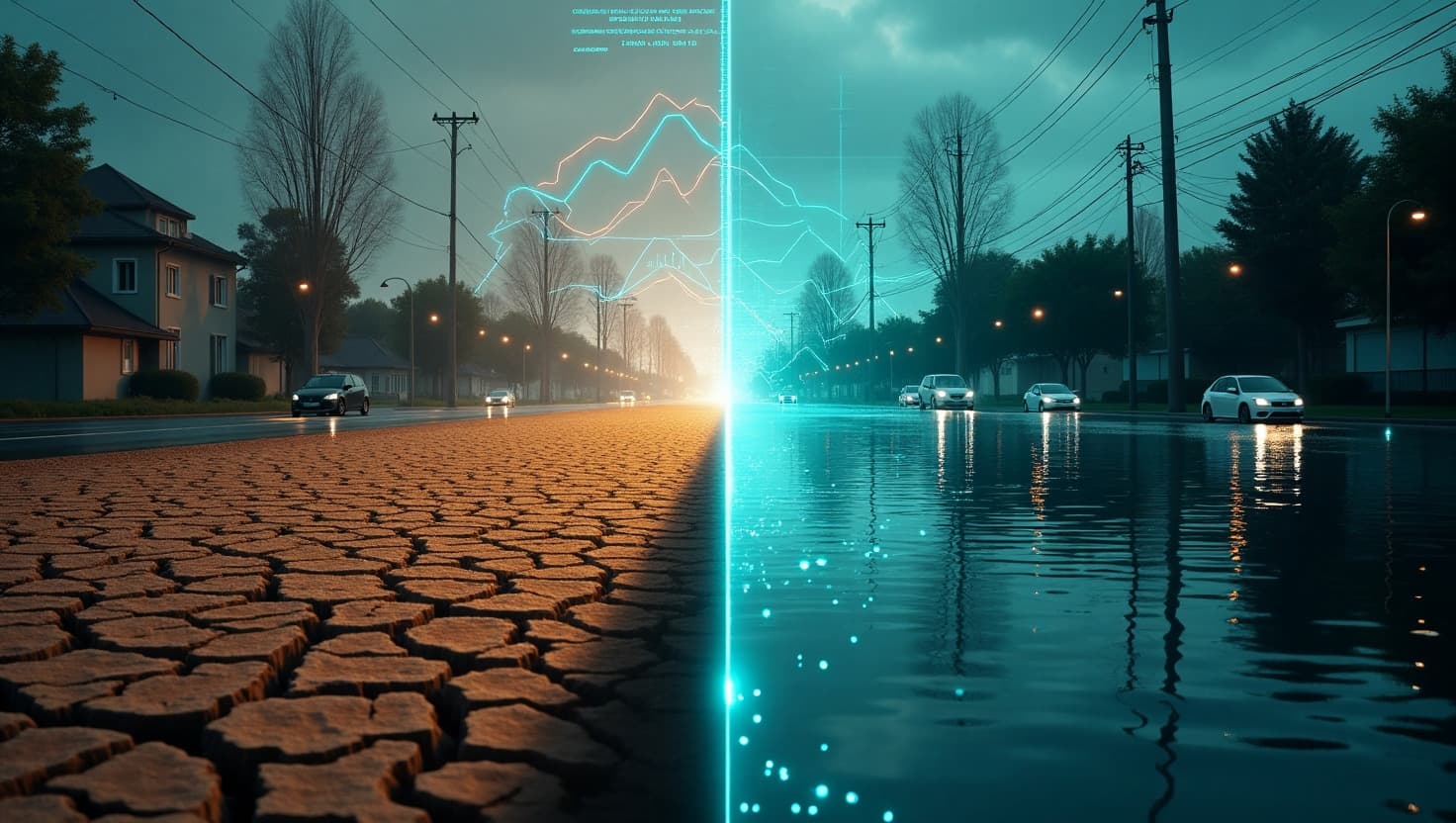
By 2050, nearly 5 billion people will live in water-stressed regions. At the same time, floods caused by extreme weather will displace millions elsewhere. This paradox of scarcity and surplus means traditional policies are no longer enough.
Beyond Infrastructure
The challenge isn’t just physical. It’s informational. Who uses water, when, and for what purpose? How do cultural practices, agriculture, and industry intersect? These are complex questions, and AI is uniquely capable of making sense of such complexity.
Beyond Monitoring: AI as a Water Interpreter
Water systems already generate huge volumes of data, rainfall patterns, river flows, soil moisture, household usage. But raw data is not insight.
AI transforms numbers into understanding:
- Predictive Hydrology. Forecasting droughts, floods, and groundwater shifts.
- Behavioral Insights. Revealing cultural and social patterns in how communities consume water.
- Systems Thinking. Integrating climate, economic, and social data to simulate possible water futures.
AI doesn’t just measure water. It helps us interpret it.
The Politics of Water and the Promise of Transparency
Water is power. Decisions about allocation often shape societies more than oil or electricity. Corruption and mismanagement remain huge obstacles.
AI introduces new possibilities for transparent governance:
- Blockchain tools track flows from source to tap.
- Public dashboards give communities real-time visibility of water quality and supply.
- Scenario models allow policymakers to test decisions before enforcing them.
Trust in water governance may one day rest less on physical infrastructure and more on data integrity.
Rethinking Water Through Equity and Justice
Access as a Human Right
Despite recognition by the UN, millions still lack safe water. If AI is adopted only in wealthy countries, the gap will widen.
To prevent “digital water inequality,” AI must be:
- Localized with regional data.
- Inclusive of communities’ voices.
- Affordable through lightweight, scalable models.
Respecting Indigenous Knowledge
Communities have stewarded water for centuries. Rain-harvesting traditions in India or desert wells in North Africa provide lessons. When combined with AI forecasting and monitoring, these practices create hybrid solutions resilient to change.
The Water-Energy-Climate Nexus
Water systems are also energy systems. Treating and moving water consumes vast electricity, while hydropower dams reshape ecosystems.
AI can serve as a bridge:
- Optimizing energy consumption in treatment plants.
- Balancing hydropower with ecological needs.
- Coordinating renewable energy grids with irrigation schedules.
Saving water also means saving the energy that carries it.
Water as Cultural and Ecological Heritage
Beyond economics, water is heritage. It carries meaning through rituals, stories, and traditions.
AI can act as a cultural custodian:
- Digitizing oral histories and local knowledge of rivers and wells.
- Monitoring biodiversity in endangered water ecosystems.
- Supporting policies that protect both ecological and cultural flows.
This broadens the role of AI from infrastructure manager to guardian of heritage.
Toward Planetary Water Stewardship
Water governance is no longer a local or even national issue. Climate change ignores borders, so must our water systems.
The future may see:
- Planetary water modeling with integrated river, aquifer, and ocean data.
- Global treaties informed by AI, simulating future scenarios.
- Shared resilience platforms where communities worldwide contribute and learn.
AI can help us treat water not as a commodity but as a planetary commons.
Conclusion: The Future of Water Is Intelligent
From irrigation to aqueducts, from dams to desalination, every technological leap around water has reshaped societies. AI is the next leap.
Unlike steel or concrete, AI reshapes not the infrastructure but the possibilities, how we understand water, share it, and preserve it.
If we design it responsibly, AI will help us move from scarcity to stewardship, from crisis to resilience, and from competition to collaboration.
At L'ma360, we believe the future of water is not only about pipes and pumps, but also about intelligence, justice, and culture. The rivers of tomorrow will not just carry water, they will carry knowledge.