AI
Designing for Trust: Why Human-Centered Tech Matters in Water Monitoring
Exploring the critical role of inclusive design in building sustainable, user-friendly water technologies.
2025-07-31
Introduction
Innovative technology alone isn't enough to solve global water challenges. For tools like sensors, dashboards, and AI systems to truly work, people must understand them, trust them, and want to use them. This is where human-centered design becomes vital, especially in the context of water monitoring, where decisions directly impact health, livelihoods, and community resilience.
Trust Is Not a Feature, It’s a Foundation
In many parts of the world, water infrastructure is invisible until something goes wrong. When people are asked to adopt new technologies, especially those that claim to "automate" or "optimize", skepticism is natural. Trust must be earned.
But how is trust built into technology?
- Clarity: Users need to know what the technology does and how it works, without needing a technical degree.
- Consistency: Systems must perform reliably and predictably, especially in high-stakes situations like leak alerts or contamination detection.
- Transparency: Users should be able to see how decisions are made and access their own data without barriers.
- Participation: People trust what they help create. Involving local users in the design or feedback process creates shared ownership.
Designing for the Real World: Who Are We Building For?
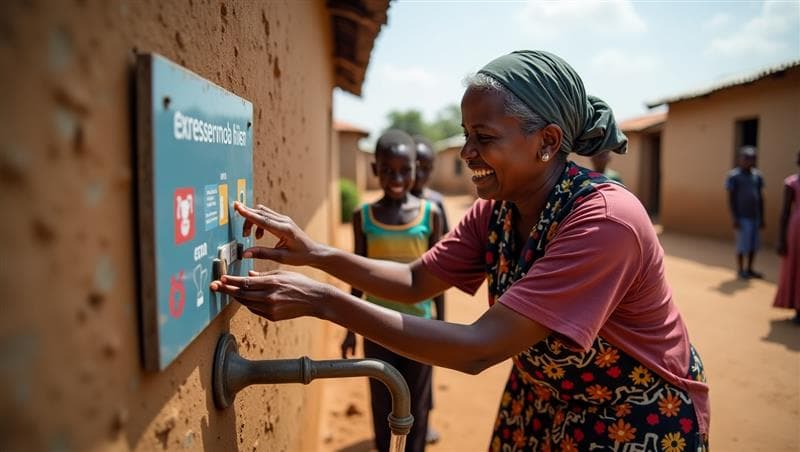
In water monitoring, users range widely, from city engineers to rural farmers, from NGO workers to school-aged children. Each user brings different levels of literacy, access, and familiarity with technology.
Designing for trust means asking:
- Can a 12-year-old read this dashboard and understand what to do?
- Can the system work without Wi-Fi or electricity for days?
- Is the alert phrased in a way that feels actionable, not alarming?
- What cultural symbols or colors might change how this data is interpreted?
When systems are tailored to people’s realities, adoption rises, and with it, long-term impact.
Co-Creation: Moving Beyond "For" to "With"
One of the most powerful ways to design for trust is co-creation: the process of building tools with communities, not just for them.
This might include:
- Running workshops to understand how people experience water issues
- Testing low-fidelity prototypes directly with end users
- Translating interface content into local dialects or non-verbal icons
- Inviting community members to shape how alerts or reports look and feel
This participatory approach ensures the solution doesn’t just arrive in a box, but is born from local wisdom and need.
Ethics, Accessibility, and the Hidden Risks
Even well-intentioned tools can fail, or worse, cause harm, when user trust is overlooked. Imagine:
- A sensor falsely reports a leak, prompting a costly repair that damages community trust.
- A user receives an alert they can’t interpret, leading to inaction during a real emergency.
- Data is stored in a cloud server they can’t access or don’t understand.
These scenarios reveal why **ethics and accessibility must be part of the design process**—not an afterthought. Building in multilingual interfaces, offline functionality, and user data control are all crucial for equitable deployment.
Conclusion
Water monitoring systems are only as effective as the relationships they foster. Human-centered design acknowledges that trust, clarity, and cultural relevance are just as important as accuracy and innovation.
In the end, building sustainable water technologies isn't just about circuits and code, it's about empathy, listening, and design that puts people first.