AI
From Sensors to Solutions: How Edge AI Is Empowering Local Water Governance
Understanding the role of on-device intelligence in transforming water access and resilience.
2025-07-31
Introduction
Access to clean and reliable water is a basic human right. Yet, for many communities around the world, especially those in rural or remote areas, traditional water management systems fall short. Centralized infrastructure often lacks the reach, flexibility, or resilience to meet the needs of these populations. Enter edge AI: a decentralized, intelligent technology that is changing the way water is monitored and managed at the grassroots level.
What is Edge AI, and Why It’s a Game-Changer for Water Systems
Edge AI refers to the ability of smart devices to process data locally, at the “edge” of the network, instead of relying on a distant server. In practical terms, this means:
- Sensors embedded with AI algorithms can analyze data on-site.
- Real-time decisions (like detecting a leak or contamination) can happen instantly.
- No dependency on internet connectivity or central cloud systems.
This is especially important for communities where network coverage is spotty or non-existent. Edge AI enables autonomous water intelligence in areas where it’s needed most.
From Detection to Action: How Real-Time Monitoring Works
Let’s say a pipe develops a leak in a remote village. Traditionally, that leak might go undetected for days or weeks, leading to enormous water waste and damage.
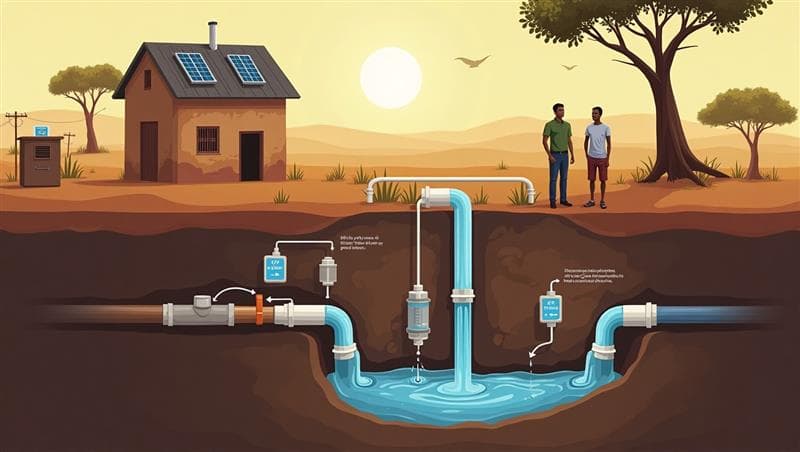
With edge AI, a local sensor immediately notices a pressure drop, identifies it as a potential leak, and triggers an alert. This alert can:
- Notify a technician via SMS or a local offline dashboard
- Shut down the relevant valve to prevent further loss
- Record the event for future analysis and pattern detection
This shift from reactive maintenance to proactive governance is what makes edge AI revolutionary.
Built for Decentralized Communities
Edge AI systems can be modular and independent. Whether it’s a nomadic settlement in the Sahara or a water-scarce suburb, each unit in a water ecosystem, be it a sensor, pump, or filter can:
- Function independently
- Learn local usage patterns
- Adapt to environmental changes
This decentralized model ensures that each community manages its own micro-system without waiting for central approvals or intervention. In effect, **local residents become stewards of their own water system**.
Empowerment Through Technology
Edge AI isn’t just about smarter machines, it’s about empowering people. With intuitive dashboards and low-power devices, even non-technical users, students, parents, village leaders, can understand how water is flowing and when action is needed.
When communities own their data and tools, they:
- Respond faster to problems
- Waste less water
- Build trust in their infrastructure
Conclusion
As climate pressures increase and urban-rural divides grow, the need for resilient, adaptable water systems becomes urgent. Edge AI gives us a path forward: a future where water is not just managed, it’s locally governed, intelligently monitored, and deeply respected.
Technological innovation at the edge may be the key to sustainable water futures everywhere.